
Keynote Address
The 19th Biennial Conference of the Sub-Saharan African Network (SUSAN) of the International Biometrics Society-Keynote Speakers
Abstract
From Small Area Estimation to Big-Data Analytics: Statistical Meta-Analysis Approach
(Din) Ding-Geng Chen, PhD. SARCHI Research Chair in Biostatistics and Extraordinary Professor in Biostatistics
Department of Statistics, University of Pretoria, South Africa. Executive Director and Professor in Biostatistics, College of Health Solutions, Arizona State University
Small Area Estimation (SAE) is an empirical Bayesian approach used to generate reliable estimates for granular geographic or demographic subpopulations, particularly when local data are sparse or unavailable. Meanwhile, Big Data Analytics (BDA) has become essential in managing and analyzing vast, complex datasets in the modern data era. This presentation explores the integration of SAE and BDA through a statistical meta-analysis framework, presenting meta-analysis as a flexible and powerful tool for synthesizing diverse data sources. By addressing the unique challenges of both SAE and BDA, meta-analytic methods offer new opportunities to improve the precision, relevance, and scalability of statistical inference—especially in public health and the social sciences. The talk highlights methodological innovations, scalable computational strategies, and practical implications for data-driven policy and localized decision-making, providing a blueprint for leveraging big data in statistically principled ways to inform small-area insights.
How Leaky is your Data Analysis Pipeline?
Alison Kelly, Qld Alliance for Agriculture and Food Innovation, The University of Qld, Australia
Statistical methods have played a major role in achieving the genetic gain required for the release of improved crop varieties to keep pace with the increasing food demands placed on the agricultural sector. The linear mixed model (LMM) is the workhorse for the analysis of data from plant breeding experiments and can be extended to include variance models for correlated data to improve accuracy of the estimation of genetic effects. High throughput phenotyping platforms are now regularly being employed by plant improvement programs, both in the field and under controlled environment conditions, where they are used to capture images of real-time plant and root growth for many genotypes over time. As such, recent advances in LMM-based statistical methodology have been centred around the efficient and accurate modelling of large volumes of data generated from such platforms, over both space and time. An Australian case study is presented to demonstrate the analysis of imaging data capturing the growth of wheat genotypes over time in a field trial. Spatio-temporal models are fitted to jointly model the correlation over spatial dimensions in the field and repeated measurements of the response over time. Simultaneously, smooth growth-response profiles are estimated for each genotype in the trial using the LMM representation of the cubic smoothing spline. Using this approach, crop growth parameters of interest are derived from the spline coefficients, and improvements in the accuracy of the genetic effect estimates are demonstrated for each stage of the data analysis pipeline. This study demonstrates that efficient statistical methods which appropriately model spatio- temporal dependence in the data, while partitioning sources of non-genetic systematic variation, markedly improve the accuracy of the estimated genetic effects in the data analysis pipeline. In practice, this aids plant physiologists and breeders in better understanding plant adaptation to reduced light, increased heat and changes in water availability due to climate extremes.
Keynotes Speakers
Keynote Speakers at the 19th Biennial Conference of the Sub-Saharan Network of the International Biometrics Society
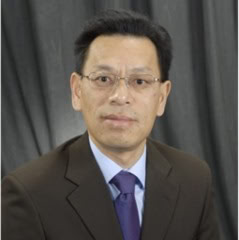
Ding-Geng (Din) Chen, PhD
Read More
Dr Din Chen is a professor, an elected member of Academy of Science of South Africa (MASSAf), an elected fellow of the American Statistical Association (FASA), and an elected member of the International Statistical Institute (ISI). He is now the SARCHI research chair in Biostatistics and an extraordinary professor in biostatistics at the Department of Statistics, University of Pretoria, South Africa. Professor Chen is also the executive director and professor in Biostatistics at the College of Health Solutions, Arizona State University. He served as the Wallace H. Kuralt Distinguished professor in biostatistics at the University of North Carolina-Chapel Hill, a biostatistics professor at the University of Rochester Medical Center, and the Karl E. Peace endowed eminent scholar chair in biostatistics from the Jiann-Ping Hsu College of Public Health at the Georgia Southern University. Professor Chen has published more than 300 research papers and 42 books on biostatistical clinical trials, survival data, meta-analysis, causal inference and structural equation modeling, Monte-Carlo simulation-based statistical modelling. His research has been funded as PI/Co-PI from NIH R01s and other governmental agencies.

Alison Kelly, PhD
Alison Kelly began working as an Applied Biometrician at the Department of Primary Industries, Queensland, Australia in 1987 and completed her PhD in Statistics on a part-time basis at the University of Queensland.
Read More
Alison Kelly began working as an Applied Biometrician at the Department of Primary Industries, Queensland, Australia in 1987 and completed her PhD in Statistics on a part-time basis at the University of Queensland. She has worked extensively on statistical applications in the agricultural sphere, with her practical interests revolving around spatial analysis of field trials, statistical genetics, multi-phase experimental design for laboratory studies and high-dimensional spectral and sensing data. More recently, Alison has joined the Qld Alliance for Agriculture and Food Innovation (QAAFI) Institute at the University of Queensland and is currently a Theme Leader of Predictive Agriculture for Improved Productivity and Value. One current project highlight is working on a Gates Foundation funded collaboration in Ethiopia. In this project, Alison trains and mentors biometricians and crop breeding teams in implementing modern statistical methods for plant breeding research at the Ethiopian Institute of Agricultural Research.
Session Highlights
Keynote Address
Gain insights into contemporary research methodologies from a leading expert in the field.
Contributed Presentations
Discover a variety of research topics presented by emerging scholars and professionals, emphasizing the impact and growth of biostatistics and data science in the region.
Ethiopia Biometric Society
6 Kilo, Leadership International Building
1st Floor, Office No. 104-A
Addis Ababa, Ethiopia
Email: ethiopianbiometricssociety@gmail.com
Usefull Links
- Copyright 2025, All Rights Reserved!